
 English
 Deutsch
 Italia
 français
 Español
 Português
 русский
 العربية
 日本語

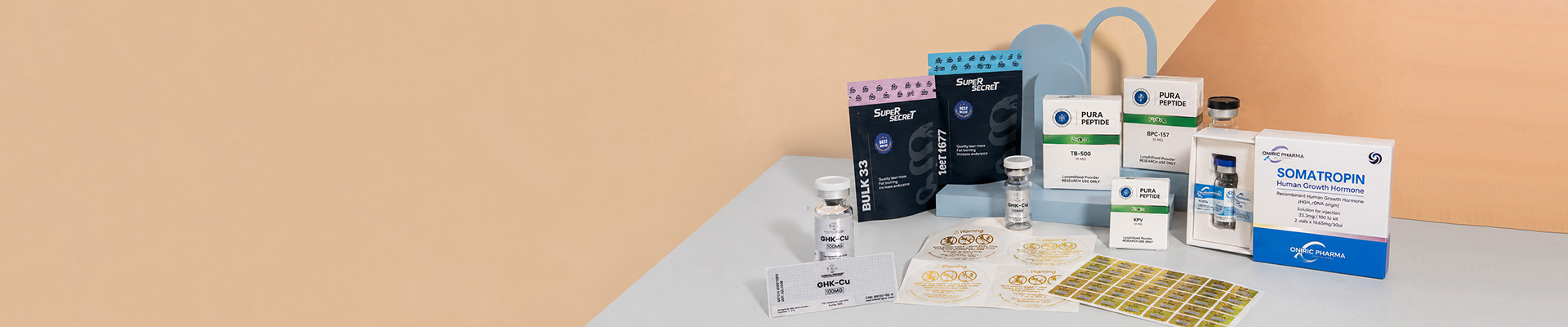

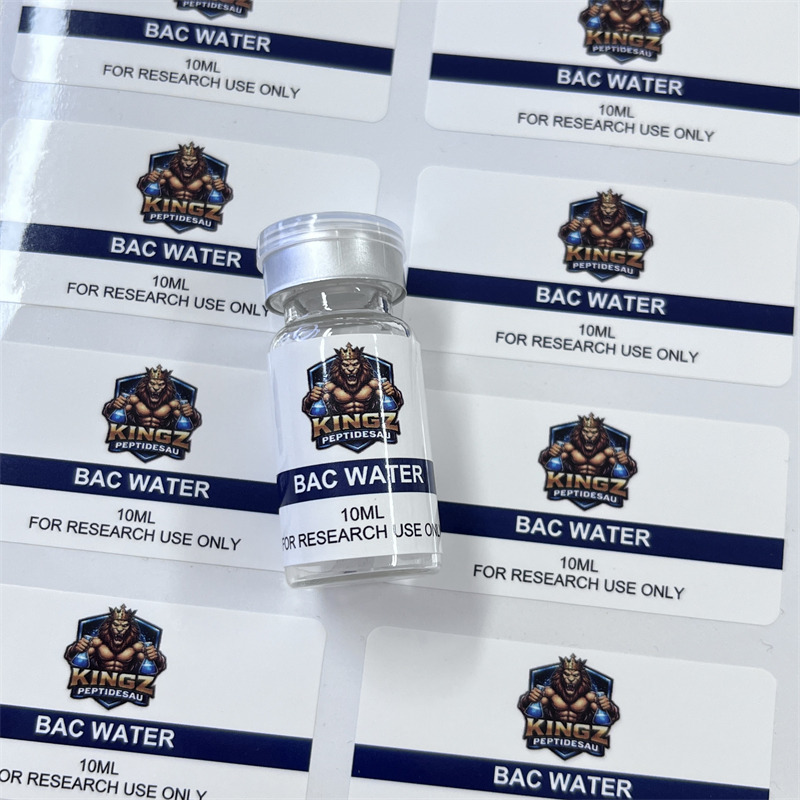
A cold-storage label fails for one of two reasons: the face stock goes rigid, or the adhesive loses tack. On a vial that is stored at minus 20 or minus 80 degrees Celsius, paper is the wrong face stock and a general-purpose permanent adhesive is the wrong adhesive, no matter how good the print looks at room temperature. The material that works is a polyethylene or PET film with a freezer-grade acrylic adhesive, specified as a pair rather than chosen separately.
Why the adhesive fails before the paper does
Pressure-sensitive adhesive works by wetting out the surface it is pressed onto. Cold reduces that wetting: below roughly minus 20 degrees Celsius a standard permanent acrylic becomes glassy, and its grip drops sharply. The label then lifts at the edges, takes on condensation behind the film, and in a freezer box the edge lift turns into a peel.
Freezer-grade adhesives are formulated to keep enough tack at low temperature to hold the edge. They are a distinct product, not a thicker version of a standard permanent. When a supplier quotes a label for cold storage, the adhesive grade has to be named on the quotation - if the quotation only says permanent, the grade has not been specified.
Face stock: what each material does in cold storage
Polyethylene film. A soft, conformable film. It bends around a small vial diameter without lifting, and it does not tear when the vial is handled with gloves. It is opaque white, and it stays flexible at freezer temperature. This is the default choice for a small-diameter vial that is stored cold.
PET film. Stiffer and dimensionally stable, with better print definition than PE. It takes a clear or metallised finish well. On a narrow 3ml barrel it is less forgiving than PE, because the stiffer film resists the tight curve. It suits a larger diameter, or a flat panel on a carton.
Coated paper. Prints beautifully and costs least, but absorbs moisture. In a refrigerator it cockles; in a freezer it becomes brittle. Paper is the right answer for a carton or a shelf-ready pack, not for a vial that goes into cold storage.
Metallised and foil-faced stock. Attractive, but a heavy metallic layer on a tight radius cracks along the curve when the vial is squeezed. Keep metallised finishes to flat areas or large diameters.
Matching the material to the storage temperature
- Ambient, 15 to 25 degrees Celsius. Coated paper, PE or PET all work. Choose on appearance and cost.
- Refrigerated, 2 to 8 degrees Celsius. PE or PET film with a standard permanent adhesive is usually enough, provided the vial is dry when labelled. Paper will cockle.
- Frozen, around minus 20 degrees Celsius. PE film with a freezer-grade acrylic adhesive. Paper is out.
- Ultra-low, around minus 80 degrees Celsius. PE film with a freezer-grade adhesive rated for the temperature, and a laminate over the print to stop scuffing when frozen vials rub together.
These are material behaviours, not a guarantee for a specific product. The freeze cycle in your own box - how fast it drops, how often the box is opened, whether the vials are in racks or loose - changes the load on the edge. Confirm on a physical sample through your own cycle before the run.
Condensation is the second failure mode
A vial labelled at room temperature and then frozen will pull condensation as it comes back out. If the label edge is not fully bonded before the vial goes cold, water gets under the film and the print discolours from behind. Two rules prevent most of it: apply the label to a dry surface at room temperature, and give the label enough dwell time to wet out fully before the vial enters the cold chain.
A laminate over the print adds a barrier and keeps the ink away from moisture. On an ultra-low freezer label it is worth specifying.
What to send for an accurate quote
- Storage temperature, and whether the vial cycles in and out of the freezer
- Barrel diameter at the point of application, and the usable height
- Whether the vial is glass or plastic, and whether the surface is dry or frosted
- Application by hand or on an applicator, and the roll or sheet format
- Quantity, and the artwork or the variable data that has to be printed
How we produce it
Labels are printed on film or paper stock, die-cut to the size you specify, and supplied on rolls or sheets. A physical proof is produced before the run so the material, the adhesive grade and the finish are confirmed on the actual stock rather than on screen.
Minimum order is 100 pieces per size and design. Proofing takes 1 to 3 business days from approved artwork, bulk runs 7 to 15 business days after approval, and digital short runs ship in 48 hours.
Frequently asked questions
Which label material should I use for a minus 80 degree freezer?
Polyethylene film with a freezer-grade acrylic adhesive. Specify the adhesive grade explicitly, and add a laminate over the print if frozen vials rub together in the box.
Can I use a standard permanent adhesive in a freezer?
Not reliably. A general-purpose permanent acrylic loses tack at low temperature and the label lifts at the edge. The adhesive has to be a freezer grade.
Will a paper label survive a refrigerator?
It will stay attached for a while, but it absorbs moisture and cockles, and the print degrades. For anything that is stored cold and handled, film is the safer specification.
Does the label have to be applied before or after filling?
Either is possible. What matters is that the surface is dry and at room temperature at the moment of application, and that the label has dwell time before the vial goes into cold storage.
Related: vial label materials, vial labels and peptide labels, 3ml vial label specification guide.
