
 English
 Deutsch
 Italia
 français
 Español
 Português
 русский
 العربية
 日本語
日本語
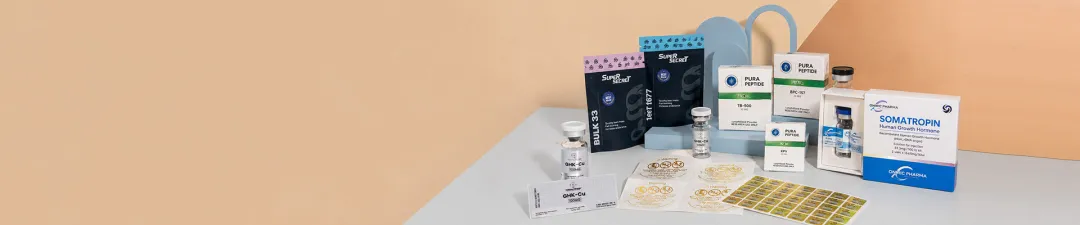

A box seal sticker is a pressure-sensitive label used to close, secure or brand a printed carton — a strip across a lid seam, a seal over a tuck flap, or a branded closure on a folding box. We print box seal stickers at our Wenzhou factory from 1,000 pcs, with free design and free proofing. Quotes come back within 24 hours, physical samples in 1–3 business days and bulk in 7–15 business days. If you need the seal matched to your carton and your product label, we produce the whole set here so the finish reads consistently.
What a Packaging Seal Sticker Is Expected To Do
A packaging seal sticker usually has to do three jobs at once, and they pull in different directions.
The first is mechanical: it has to hold. A seal that spans a lid seam resists the box opening in transit, and a tuck flap that springs open inside a mailer is a common complaint on small cartons. That job is decided by the adhesive and the surface it lands on, not by the print.
The second is informational or decorative. The seal often carries the logo, a batch field, a variant name or a short message, and on a plain kraft or white box a printed seal is the cheapest way to brand a generic carton.
The third is a signal that the box has not been opened. This is where honesty matters. A seal can make opening obvious — a strip that breaks, a label that must be cut, a piece that leaves a mark — but a printed sticker is not a certified security device, and we will not describe one as tamper-proof. What we will do is specify a construction that opens visibly, which is what most brands actually want.
Tamper Strip Label: Designing the Break
A tamper strip label is the long, narrow piece that crosses a lid or a flap and breaks or shows a mark when the box is opened. Its design is a practical decision more than a visual one.
The strip should cover the seam fully and land with margin on both sides of it. A strip that stops exactly at the fold will lift as the box flexes; a strip that runs 10–15 mm past each side of the seam holds better and still peels cleanly when the customer opens the box.
The break behaviour comes from the material. A paper strip tears across the seam; a film strip stretches and can be peeled back intact. If the goal is a strip that cannot be removed without leaving evidence, a paper or partly scored film strip is the usual answer. If the goal is a strip that can be lifted and replaced for a return, a clean-peel film is the better choice.
Placement matters as much as material. A strip applied over a glossy laminated box grips differently from one applied over an uncoated kraft panel, so tell us the box’s surface finish and we will match the adhesive to it.
Box Sealing Label Materials and Adhesives
Three stock families cover most box sealing label work.
Coated paper is the default. It prints cleanly, takes fine type and a logo well, and is the most economical option. It tears rather than stretches, which suits a strip that is meant to show when it has been opened. It needs a laminate if the box will be handled with damp hands or shipped in a humid environment.
Synthetic paper and PE are the choice when the sticker has to survive moisture, cold or a wipe-down. They cost more per piece and are usually reserved for chilled or export shipments.
Foil and holographic stock, including laser silver, is used where the seal also carries a brand or security look. We print on these stocks and can add hot foil stamping to a paper seal. We do not describe any printed element as counterfeit-proof.
Adhesive selection is the part buyers most often overlook. A permanent adhesive is right for a seal that should not move; a removable or clean-peel adhesive is right for a strip that has to lift without tearing the box print. Tell us whether the seal is meant to be permanent or reopenable and we will specify accordingly — it is not something that can be fixed after the labels are printed.
Printing a Box Seal Sticker That Matches the Carton
A seal is read together with the box, so the two need to agree on colour and finish.
If the carton is printed by one supplier and the seal is bought from another, small differences in ink and lamination become obvious the moment the two are side by side. Because we print boxes, cards, trays and labels from the same plant, one proofing round covers the whole set, and the colour you approve on the seal is the colour we match on the box.
There is also a practical design point. A seal that repeats the whole box artwork reads as clutter; a seal that carries one element — the logo, a monogram, a short line — reads as a considered closure. On a small carton the seal is often the only element allowed to use foil, which is why a single metallic seal on an otherwise matte box looks deliberate rather than decorative.
If you already have a carton printer you are happy with, we can print only the seals. You do not need to move the whole job to work with us.
Quantities and How a Box Sealing Label Order Runs
Labels start at 1,000 pcs, and boxes, cards and plastic trays start at 100 pcs. Printing and die-cutting are set up on a roll, so a 1,000-piece first run is what makes the setup worthwhile, while a box can be produced economically at 100.
The sequence for a first order:
- Send the box surface, the seal size and the quantity. If the seal crosses a seam, tell us the seam position.
- We return a dieline and a quote within 24 hours, including an adhesive recommendation for a permanent or reopenable seal.
- Free design. Send artwork and we place it on the dieline and return a proof. If you have only a logo, we propose one to three layouts, normally within two to three days, and revise until it is right.
- Physical sample in 1–3 business days, applied to the box where possible, so you can test the break and the peel.
- Bulk production in 7–15 business days after approval, behind four quality gates: incoming material, first article, in-process random sampling and final AQL inspection with defects isolated.
- Delivery by sea, air or express to the regions we serve. Payment is by T/T with a 30–50% deposit.
FAQ
What is the difference between a box seal sticker and a tamper strip label?
A tamper strip label is one use of a box seal sticker: a narrow strip that crosses a lid or flap seam and shows when the box has been opened. A seal sticker can also be a simple branded closure that carries no break function.
Can you print the seal to match my box?
Yes. Boxes, cards, trays and labels are produced here, so one proof approval covers the set and the colour is matched across all of them.
Which material should I choose for a packaging seal sticker?
Coated paper suits a seal that is meant to tear and show when opened; synthetic paper or PE suits moisture and cold. Tell us the box’s surface finish and whether the seal must be permanent or reopenable, and we will specify the adhesive.
Is a box sealing label tamper-proof?
No printed label is tamper-proof, and we will not describe one as such. A strip can be made to open visibly; how much security you build is a brand decision.
What is the minimum order?
1,000 pcs for labels. Boxes, cards and plastic trays start at 100 pcs. Physical samples are separate and take 1–3 business days.
What do you need from me to quote?
The box surface and finish, the seal’s finished size, whether it crosses a seam, and the quantity. Artwork is helpful but not required to start.
Start a box seal sticker project — send the box surface, the seal size and your target quantity, and you will have a dieline and a price within 24 hours. Free design and free proofing; labels from 1,000 pcs; samples in 1–3 business days.
